

How To Allow A Program In Firewall Windows 10
In Windows 10, the Windows Firewall hasn't inverse very much since Vista. Overall, it's pretty much the same. Entering connections to programs are blocked unless they are on the allowed list. Outbound connections are non blocked if they do not friction match a rule. You besides have a Public and Private network contour for the firewall and tin command exactly which program can communicate on the private network every bit opposed to the Net.
In this article, I'll go through the various options and settings for the Windows ten firewall and talk about how you can adapt them to adjust your needs. Fifty-fifty though outbound connections are non blocked by default, you can configure your own firewall rules in Windows x to block outbound connections. This can exist useful if y'all want to block a specific plan from being able to communicate with the Internet, even if the program gets installed without your consent.
To go started, let'southward talk most how to bring up the firewall settings in Windows ten. Yous can either open the Command Console and open the firewall from there or you can click on First and type in the word firewall.
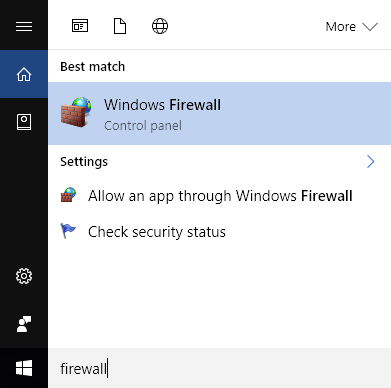
This will bring upward the Windows Firewall dialog where you can control all of the various settings for the firewall.
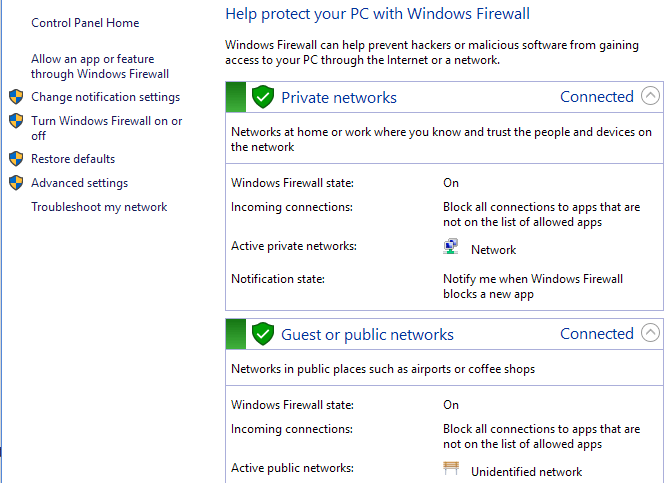
On the correct manus side, information technology splits the view into Private networks and Guest or public networks. Your home wireless network should show up nether Private networks, but if it doesn't, and then you will probably have to manually tell it that the network is a Dwelling house network and not a Public network.
Allow Program through Firewall
The chief reason most people will ever mess with the firewall is to let a program to piece of work through the firewall. Usually, this is automatically done by the program itself, only in some cases, you take to exercise it manually. Y'all can practice this past clicking on Allow an app or feature through Windows Firewall.
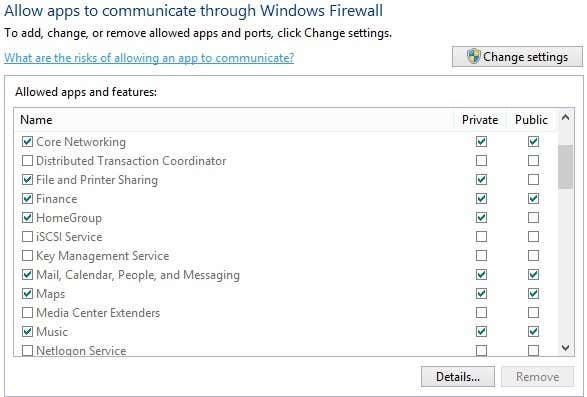
Equally you tin can see, for each program or feature of Windows, you can choose to allow incoming connections on the private and public networks separately. This separation is handy for things like File and Printer Sharing and HomeGroups since we don't want someone from public WiFi to be able to connect to a network share or a local HomeGroup. To permit an app, simply notice it in the list so check the box for which type of network y'all want to allow incoming connections on.
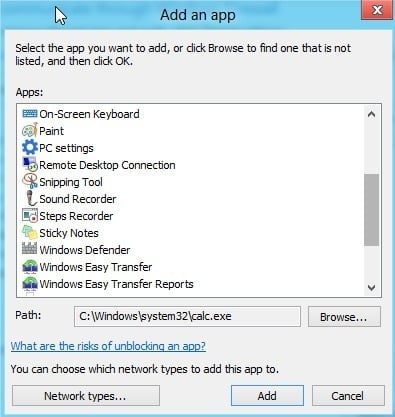
If the app is not listed, yous tin click on the Allow another app button and choice from a listing or click the Browse button to detect your programme specifically. If the push is greyed out, click on Alter settings beginning.
If you go back to the Firewall dwelling house dialog, there is another link on the left-paw pane called Turn Windows Firewall On or Off. If you click on that, you'll become a set of options like shown beneath:
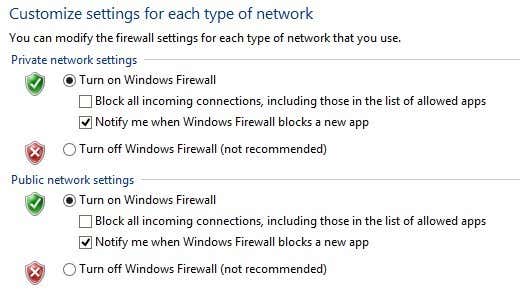
You tin can turn off the firewall in Windows 10 entirely, merely that will allow everything through the firewall. You can also cake all incoming connections to your computer, even for allowed apps, which is useful in certain situations. For example, if you are in a public setting like a hotel or airdrome and you want to be extra safe while continued to the network. You lot can yet browse the Internet using a web browser, simply no programme volition be able to create an incoming connection from some other computer on the local network or from a server on the Internet.
Advanced Firewall Settings
The real fun, though, is if y'all want to mess around with the advanced firewall settings. This is obviously not for the faint of centre, but information technology's also not a big deal considering y'all can click the Restore Defaults link and set everything dorsum to the way it was when y'all starting time installed Windows 10. To get to the avant-garde settings, click the Advanced settings link in the left-paw pane on the firewall master dialog. This volition bring upwardly the Windows Firewall with Advanced Security window:
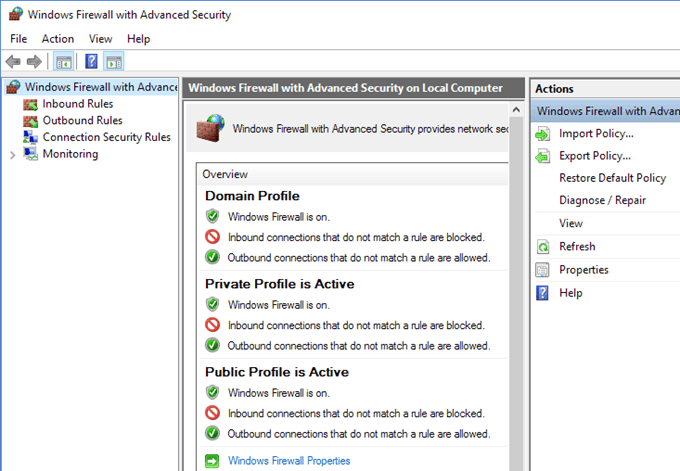
On the main screen, it gives you a quick overview of your firewall settings for the domain, individual networks, and public networks. If your computer is not joined to a domain, yous don't accept to worry almost that profile. You can quickly encounter how inbound and outbound connections are managed by the firewall. Past default, all outbound connections are immune. If you lot want to block an outbound connection, click on Outbound Rules in the left-hand column.
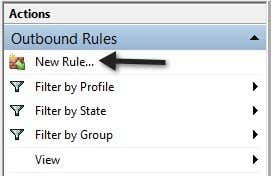
Go ahead and click on New Rule and and so you'll get a dialog asking what type of rule.
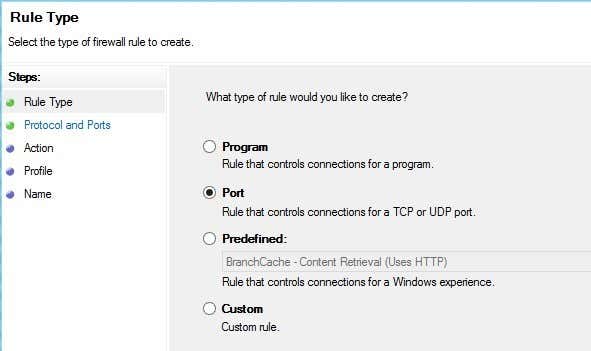
I chose port because I want to cake all outgoing connections on port 80, the HTTP port used by every web browser. In theory, this should block all Internet admission in IE, Edge, Chrome and other browsers. Click Next, select TCP and type in the port number.
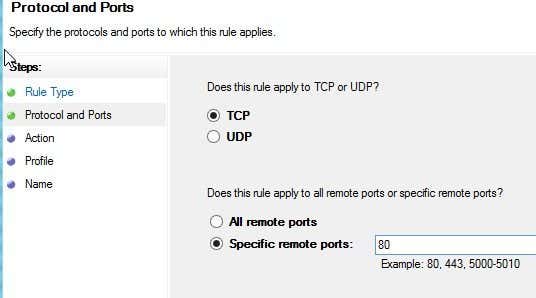
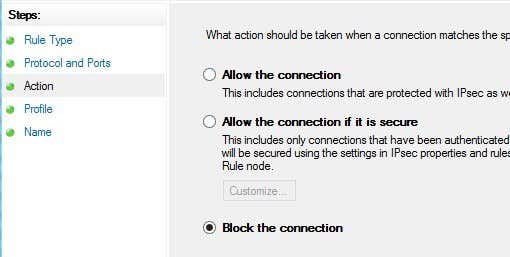
Click Next and cull the action you want to perform, in my case, Cake the connectedness.
Finally, cull which profiles you want the rule to use too. It'southward probably a practiced thought to just pick all the profiles.

Now just requite it a name and that'southward it! When I open up Chrome to visit whatever webpage, I go the following error message:
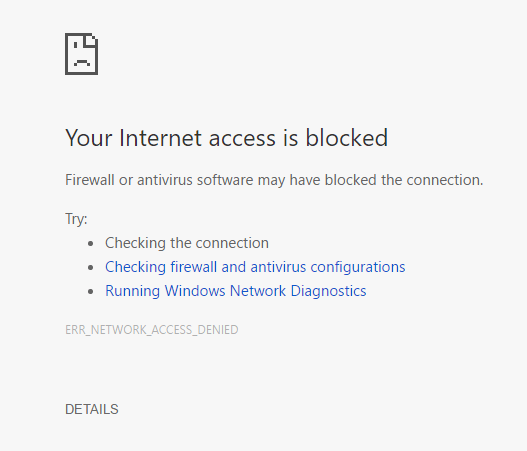
Sweetness! So I just created a new outbound connection rule in Windows ten firewall that blocks port 80 and therefore prevents anyone from browsing the Cyberspace! Yous can create your own custom firewall rules in Windows 10 following the steps I showed higher up. Overall, that's pretty much all there is to the firewall. You can exercise more than advanced stuff, only I wanted to give a decent overview that even non-technical people can attempt to follow.
If y'all have any questions about configuring the firewall in Windows x, postal service a comment here and nosotros'll effort to help. Enjoy!
Do not share my Personal Information.
Source: https://www.online-tech-tips.com/windows-10/adjust-windows-10-firewall-settings/
Posted by: menendezupong1962.blogspot.com
0 Response to "How To Allow A Program In Firewall Windows 10"
Post a Comment